
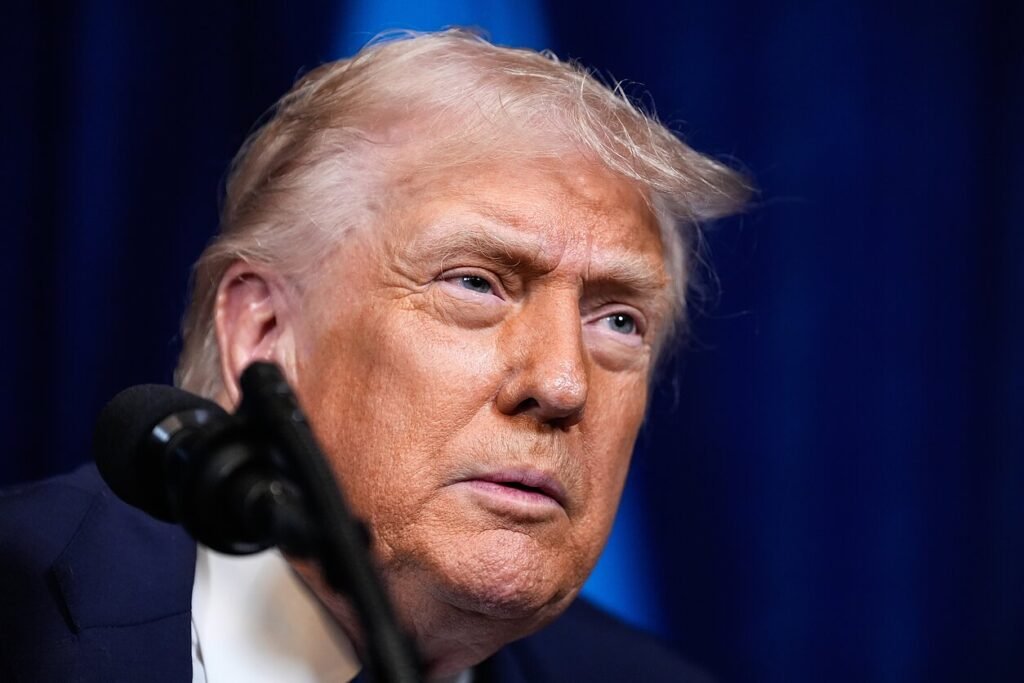
U.S. President Donald Trump has publicly stated
U.S. President Donald Trump has publicly stated that during his conversation with French President Emmanuel Macron, the issue of a potential increase in drug prices in Europe was discussed. According to Trump, Macron allegedly acknowledged that price increases were being considered but asked that the matter not be discussed publicly.
This statement was made by Trump himself in public remarks and was widely quoted by the media. The U.S. president claimed that European countries could raise prescription drug prices by as much as “200 percent or whatever is necessary,” while the public allegedly should not be informed about such decisions.
At the same time, the French presidency (the Élysée Palace) has rejected Trump’s version of events, stating that no such agreement or discussion took place and that France has not made any decisions regarding a drastic increase in drug prices.
Word against word: two presidents, two versions
The situation that has emerged is essentially a classic case in which the public statement of one head of state directly contradicts the position of another. At present, there is no independent evidence—neither official records nor recordings—that would allow one version to be definitively confirmed over the other.
Nevertheless, it is important to emphasize that the source of the information in this case is neither anonymous nor a third party. It is a direct statement by the U.S. president himself, for which Donald Trump personally assumes political responsibility.
Is Europe preparing for a 200% surge in drug prices?
At this time, there are no confirmed decisions by the European Union or by France that would foresee a 200 percent increase in drug prices. Pharmaceutical pricing in the EU is regulated through complex national and European mechanisms, and a one-time increase of such magnitude would be unprecedented.
Experts note that Trump’s remarks may represent political rhetoric linked to his long-standing criticism of Europe for maintaining significantly lower drug prices compared to the United States, as well as to broader discussions on trade and transatlantic relations.
Why does this story matter?
Even if Trump’s account does not reflect actual policy decisions, it raises a fundamental question for the public:
Are strategic decisions that can directly affect citizens’ living standards always communicated transparently?
If significant increases in drug prices were to be observed in European countries in the future, Trump’s statement would inevitably be recalled as an early political signal—one that was voiced publicly but officially denied at the time.
Editorial note
The information presented in this article is based on public statements by U.S. President Donald Trump and the official position of French institutions. The article does not claim to establish ultimate truth but reflects the fact that two contradictory versions exist at the highest political level.
Author: Dalius Andriukaitis
Article prepared for the news portal Lietuvosvalstybe.com