
This article has been translated into Polish from the original Lithuanian publication on the website of the Via Lietuva company by the internet portal: Lietuvosvalstybe.com
The number of signal-controlled intersections in Lithuania is increasing
Out of 50 intersections managed by “Via Lietuva,” traffic light posts were modernised at more than 20 intersections this year. The upgrades were carried out to replace outdated and technically obsolete equipment. Many of these intersections had experienced malfunctions: inaccurately operating traffic flow sensors would unnecessarily stop traffic on main roads. Following the upgrade of detection systems, traffic lights will now show a red signal only when it is truly necessary – allowing vehicles to enter from a minor road or when pedestrians press the call button.
Traffic management system
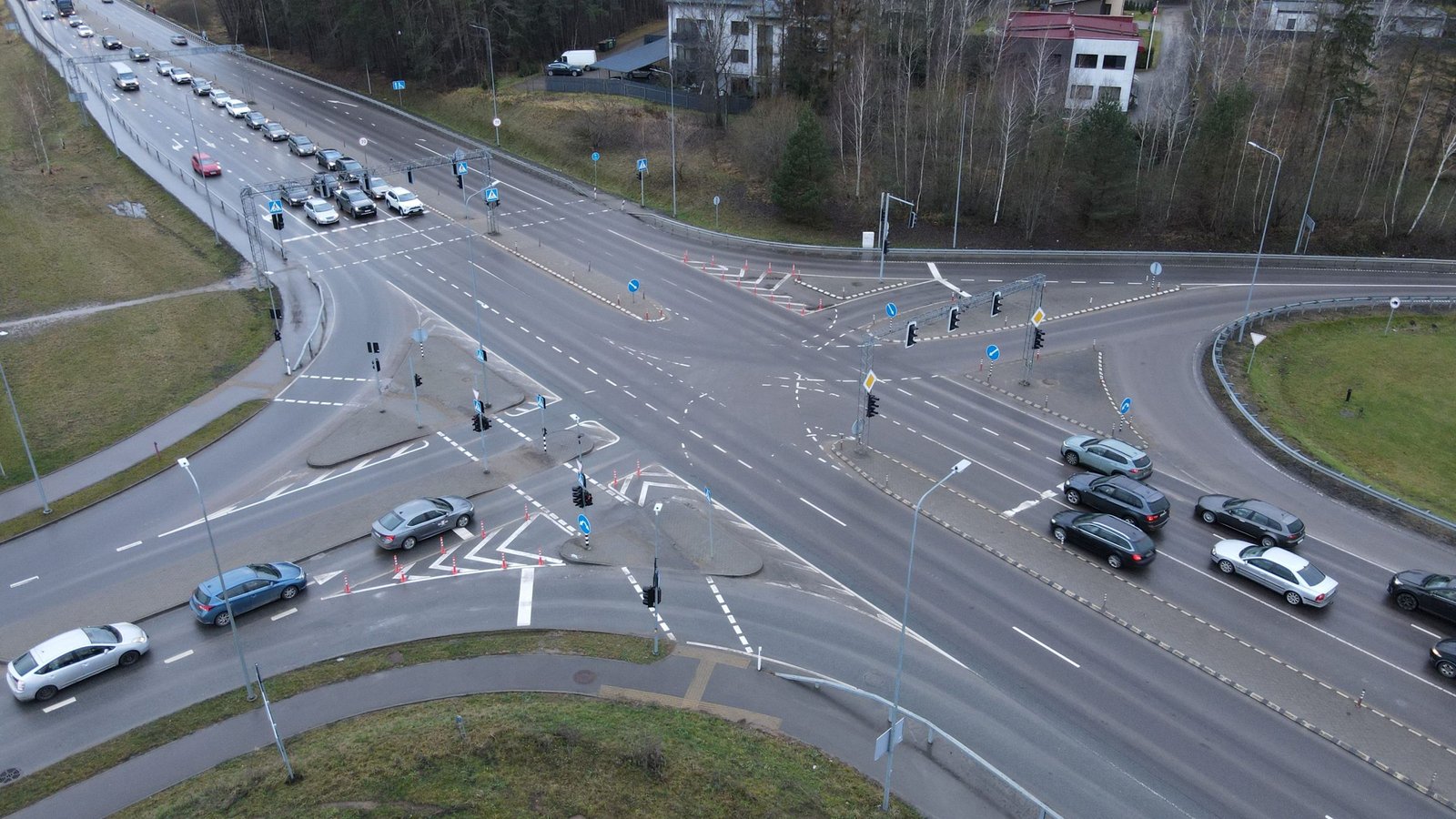
As part of the modernisation project, traffic lights were installed in accordance with the current regulations governing traffic signal installation. Excessive poles were dismantled, reducing visual clutter and freeing up pedestrian infrastructure and road shoulders.
“At 20 intersections across Lithuania, traffic lights have been modernised so that they stop traffic only when necessary. These changes will ensure fewer traffic jams, shorter travel times, and safer pedestrian crossings. Drivers will no longer have to wait unnecessarily, traffic will flow more smoothly, and daily journeys will become faster and more convenient. This is part of a continuous process of making road infrastructure smarter: already in November, we adjusted speed limits on motorways to real weather conditions, allowing driving at 130 km/h even in winter. These are small but very important changes that people will feel every day,” says Minister of Transport and Communications Juras Taminskas.
Traffic light upgrades were essential
According to Martynas Gedaminskas, CEO of “Via Lietuva,” replacing traffic light posts was essential, as many older systems were unable to manage traffic flows properly, resulting in malfunctions and congestion.
“After modernisation, traffic lights now operate in line with the latest standards, ensuring smoother traffic and improved safety for both drivers and pedestrians. These changes have improved daily traffic conditions and will make infrastructure maintenance more efficient in the future,” explains Gedaminskas.
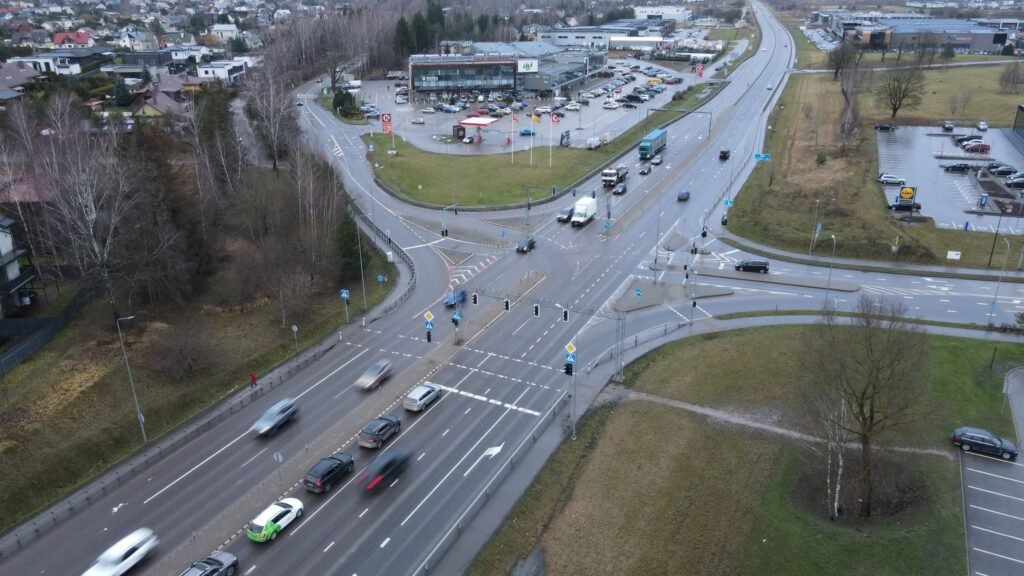
One of the latest stages of modernisation was implemented in the Vilnius District, in Riešė, on road A14 Vilnius–Utena (km 11.3), Molėtai Highway, at the intersection of Molėtai and Dangeručio streets, near the “Link Molėtai” shopping centre. Partial regulation of the right turn was introduced there.
The right turn from Molėtai Street towards Vilnius required balancing two often conflicting goals – pedestrian safety and traffic capacity. Based on expert analysis and numerous residents’ observations, it was decided to modify the regulation to protect pedestrians crossing road A14 while maintaining sufficient traffic flow from Riešė to Vilnius.
A widely used practice in Western Europe
The principle of partial regulation is widely applied in Western Europe: a flashing yellow signal warns drivers but does not regulate traffic, meaning drivers follow priority signs. A red signal is activated only when it is necessary to temporarily stop traffic, for example when pedestrians press the call button. A green signal is deliberately not used to avoid creating a false impression of uninterrupted movement. The flashing yellow reminds drivers that the turn is uncontrolled and that they must yield to traffic on the main road and safely merge onto A14 using the acceleration lane.
This solution protects pedestrians at crossings while preventing long queues for vehicles turning right from Molėtai Street. The changes on the Molėtai Street side were implemented by “Via Lietuva,” while the developer contributed on the Dangeručio Street side.
Developments in Raseiniai
In Raseiniai, on Vilniaus Street, partial modernisation works were carried out this year at the intersection with Maironio, Stoties, and Vytauto Didžiojo streets at the initiative of “Via Lietuva.” Worn-out traffic lights and cables were replaced, the layout of traffic lights and some road signs was optimised, and the traffic management program was updated. The works were initiated due to deteriorated equipment and residents’ complaints, and the optimisation significantly reduced delays, improved intersection capacity, and contributed to more efficient infrastructure management.
Developments in Šalčininkai
In Šalčininkai, at the intersection of Nepriklausomybės and Vilniaus streets, cracked and insufficient cantilever supports were replaced, all 15-year-old traffic lights were renewed, and new adaptive traffic flow sensors were installed, allowing regulation to adapt to actual traffic volumes.
On national road No. 102 Vilnius–Švenčionys–Zarasai, near Miškonys village on Nemenčinė Highway, a special “All Red” traffic light regime was introduced following residents’ complaints about increased noise. At night (10 p.m.–6 a.m.), all directions display a red signal, and green is activated only when an approaching vehicle is detected by road sensors located approximately 35–40 metres away. This has helped reduce speed and noise in residential areas, lowering average speed to 40 km/h.
Aleksandrija on road A9 Panevėžys–Šiauliai
In Aleksandrija, on road A9 Panevėžys–Šiauliai (km 74.8 and 75.05 intersections), all traffic lights were replaced, pedestrian push-buttons were installed on safety islands, and signal layouts were adapted to current regulations. On the same road in Radviliškis (km 57.14 and 58.36 intersections), equipment in very poor condition was replaced: all traffic lights and supports were renewed, new controllers and pedestrian buttons installed, including facilities for people with disabilities. Traffic sensors were also introduced, enabling adaptive green signals, while signal placement was optimised to reduce obstacles on pedestrian paths.
Developments in Kretinga
In Kretinga, on Šventosios Street near the “Norfa” shopping centre, old traffic lights and cables were replaced, excess supports dismantled or relocated, pedestrian buttons and audible signals for people with disabilities installed. A new traffic flow detection system was introduced, left-turn regulation from Šventosios Street to Slėnio Street was removed, and left turns are now permitted without waiting for a green signal, in accordance with traffic rules and signal installation standards.
In Tauragė, on road A12 Riga–Šiauliai–Tauragė–Kaliningrad (km 155.89) at the intersection with Šlaito Street, old traffic lights and cables were also replaced, new pedestrian buttons and audible signals for people with disabilities installed, and a new traffic flow detection system implemented.
Modernisation completed
Modernisation was also carried out at other locations on national roads, including multiple intersections and pedestrian crossings on roads A6, A9, A11, and No. 102. In total, works completed at more than twenty locations nationwide will ensure greater road safety, smoother traffic flow, and more convenient infrastructure for pedestrians, while enabling more efficient maintenance of traffic light systems in the future.
About AB “Via Lietuva”
“Via Lietuva” is a state-owned company responsible for the modernisation, maintenance, and operation of Lithuania’s road network. The company manages more than 21,000 km of national roads, over 1,500 bridges, viaducts and tunnels, and more than 2,000 km of pedestrian and cycling paths.
Source of information: Via Lietuva